Visiting Sumba for the First Time: The Honest Guide
Where is Sumba and what is it known for?
Sumba is an island in Nusa Tenggara Timur, in eastern Indonesia - about an hour's flight from Bali. It it not the typical tourist destination and is still largely unknown to most international travellers, which is part of its charm.
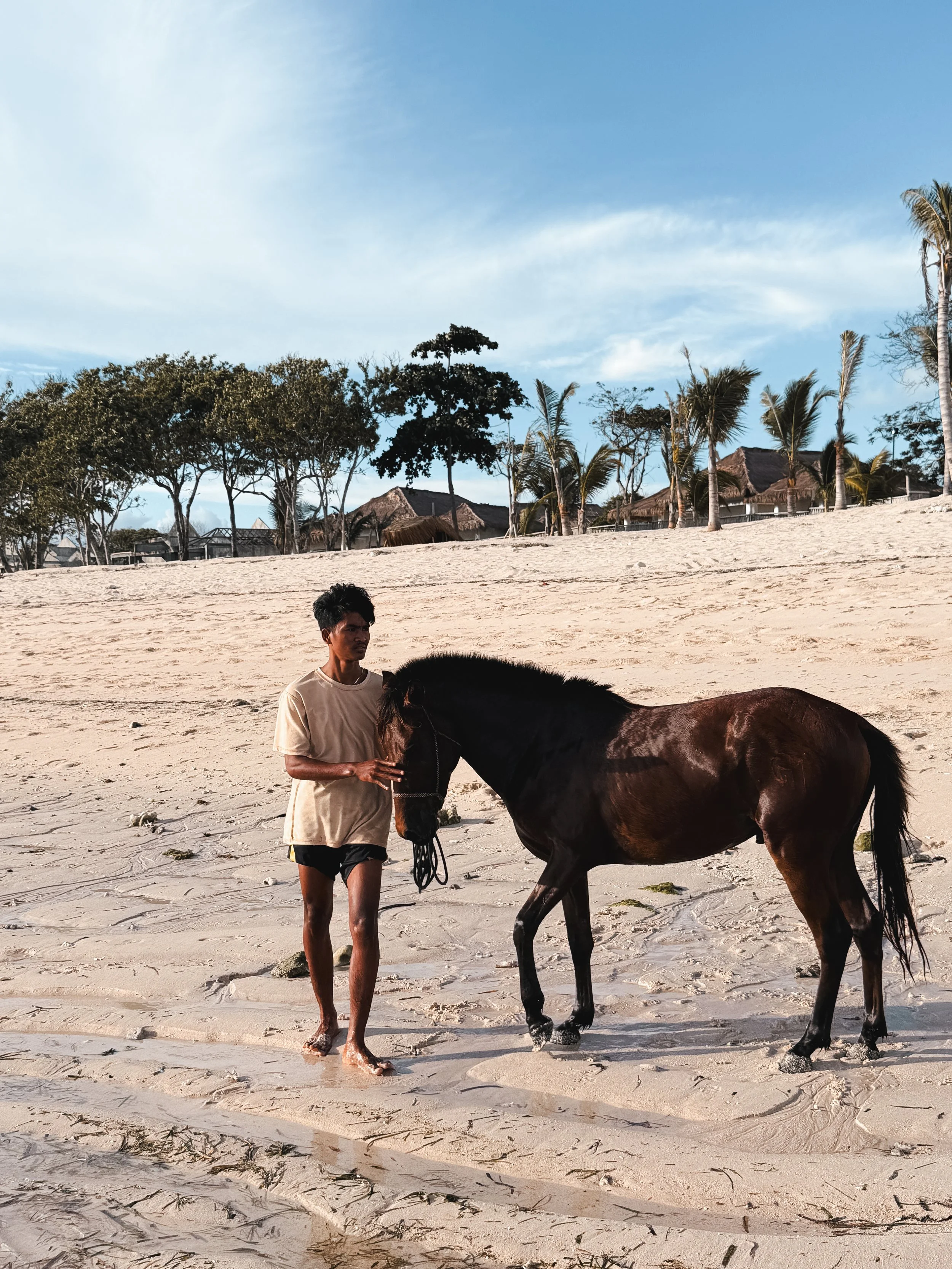
It's known for its dramatic landscapes - open savannah, clifftop beaches, ancient megalithic tombs, and traditional Sumbanese villages that have barely changed in centuries. The horses are iconic here. Sumba horses are a breed of their own, and the Pasola festival — a traditional jousting ritual held annually — is one of the most extraordinary cultural events in Indonesia.
There are two distinct regions: West Sumba and East Sumba - and they feel like completely different islands.
West Sumba is lush and green, with pristine raw beaches, green hills, rice fields, and dense vegetation. It's also where most of the cultural richness is concentrated — traditional kampung, Marapu ceremonies, and the Pasola festival all belong to the West. Here you will find a few high-end resorts.
East Sumba, by contrast, is dry and dramatic - wide open savannahs, arid hills, and a landscape that feels almost cinematic. It
This guide focuses on West Sumba.
How to get to Sumba from Bali? ✈️
There are two airports in Sumba. Tambolaka airport (TMC) serves West Sumba and is where you want to fly into if you're heading to this side of the island. Waingapu airport (WGP) serves East Sumba.
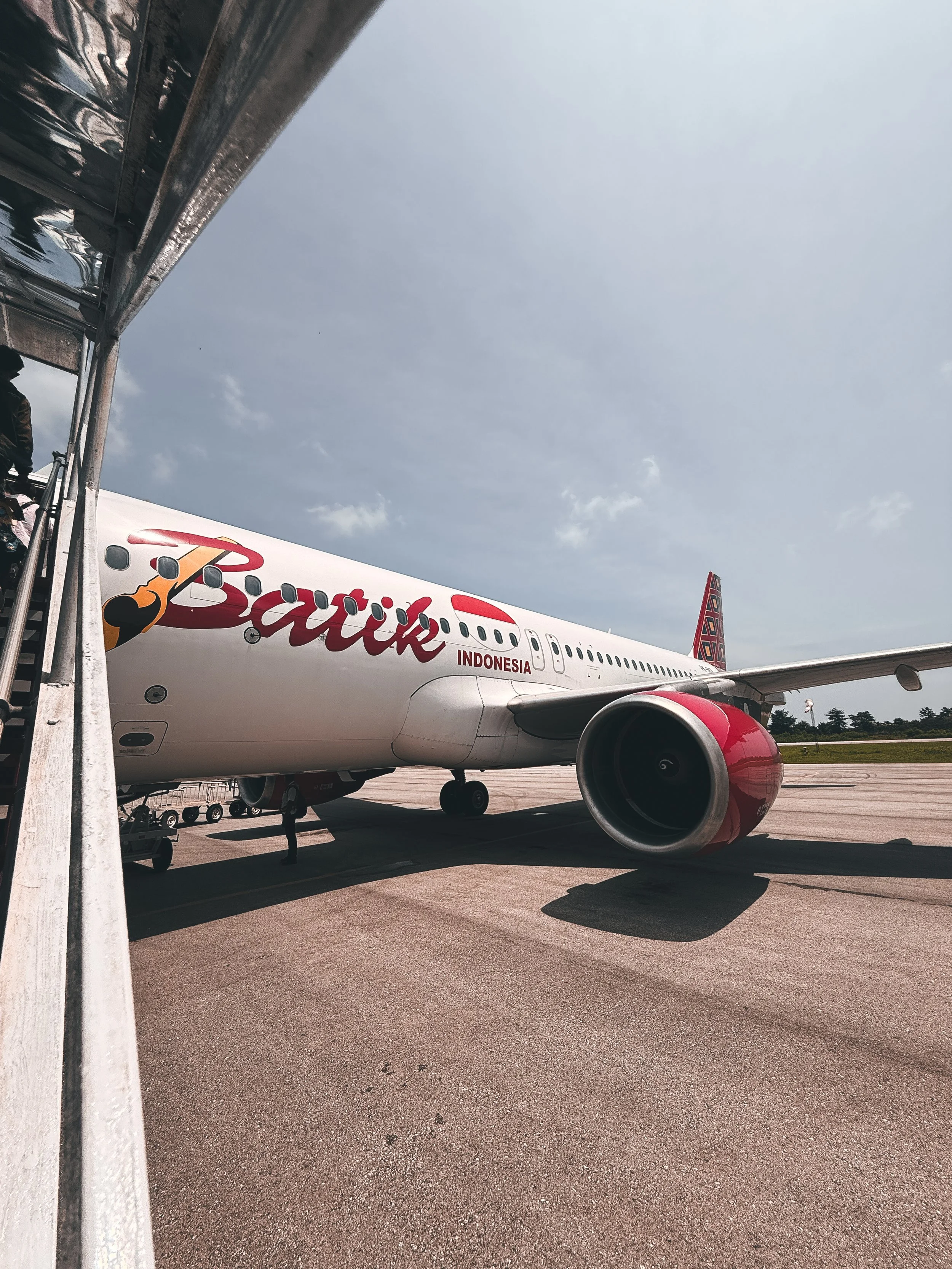
Flights from Bali are operated by Wings Air and LionAir. Expect around 1 hour of flying time. We flew with BatikAir, part of Lion Group, and the flight was on time and we travelled very comfortably.
Flights aren't always daily and schedules change, so book in advance and double-check before your trip. The airport is small, so you don’t need to arrive super early at the airport.
⏱️ Flight time: 1-1.5hrs
💵 Ticket price: ~110-120 EUR per person for a return flight
Practical information:
Where to stay in Sumba? 🛖
Accommodation options in Sumba are genuinely limited, and where you stay will define your entire experience. There are no hotel chains and not many options. You're looking at a handful of resorts and guesthouses, most of them are located in the West.
Do your research. Think about what matters to you - beach access, proximity to day trips, quality, cultural immersion and of course budget. In Sumba, you will find extremely fancy resorts like Nihi Sumba, Sanubari, and Cap Caroso. But there are also more affordable places. If you want to have direct beach access, it makes sense to book a beachfront resort. But if you care more about day trips, then maybe you can stay in the town - Tambolaka.
The right base makes all the difference when you're this far off the beaten path.
(Part 2 coming soon — I'll be sharing exactly where we stayed and why it was the right choice for us.)
How to get around the island 🛵
There is no Grab, no Gojek, no public transport worth relying on. The way to explore Sumba is to organise a driver for the day - your hotel can usually help with this, or search online (via FB groups or on Instagram). Or if you are experienced driver, then simply hire a scooter.
The transport options and prices in 2026:
Airport transfer (1.5hrs) costed us 800,000 IDR and we organised it in advance
A local driver charges 1,500,000 IDR per day - for taking you to different locations or if you hire them for a few trips they reduce the cost to 1.3 mil IDR
Scooter rental - we rented via our hotel and payed 175,000 for half day (8hrs)
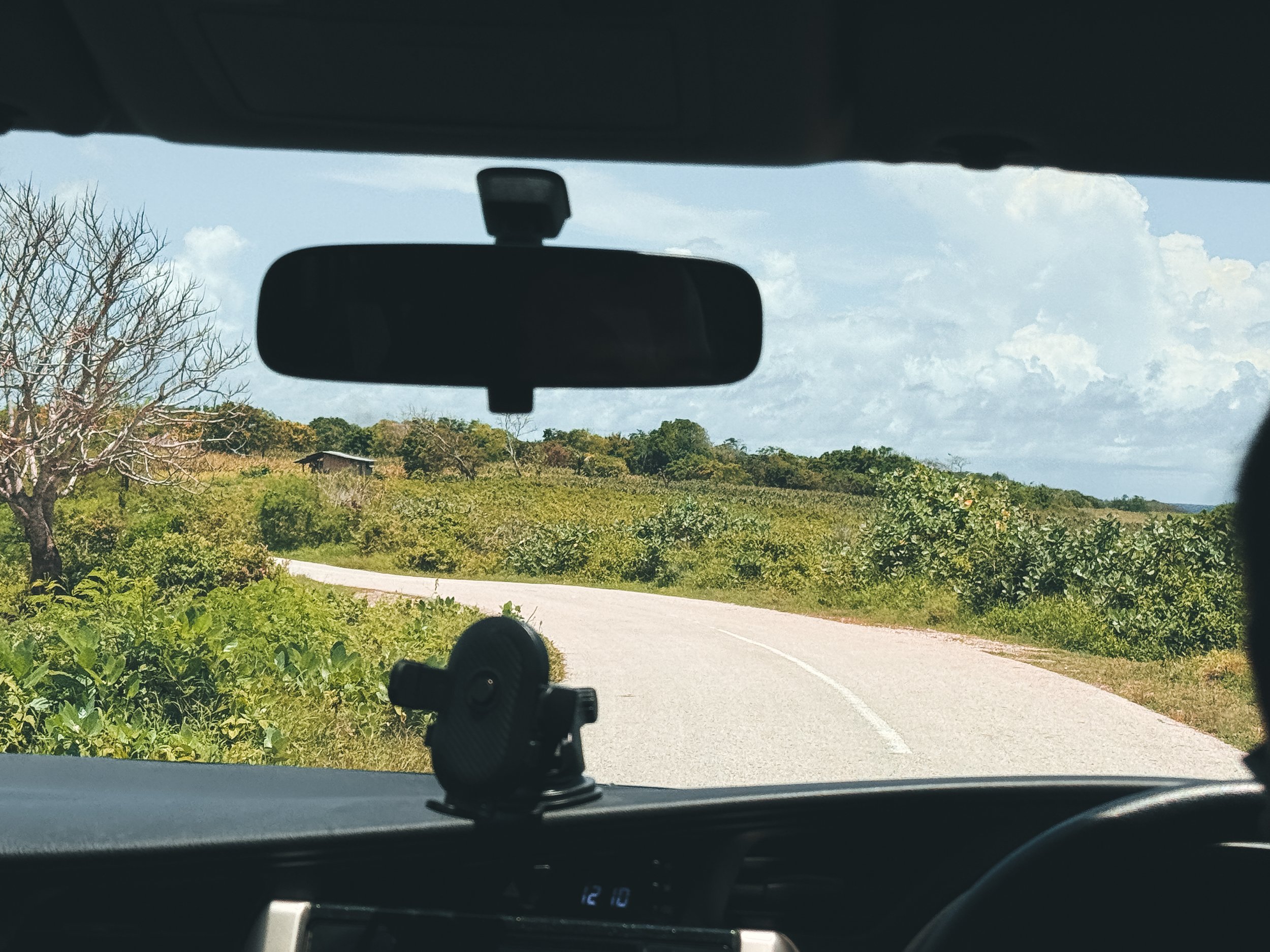
Some roads in West Sumba can be rough, so planning your trips is a must. Some routes go via dirt roads therefore the ride would be bumpy.
The main resorts offer their own transportation or organised day trips, which is the easiest option but the prices would be significantly higher.
Mobile data and Wifi 📱
Bring a local Indonesian SIM or make sure your roaming plan covers Indonesia. For me the best option is always an e-Sim and I find it to have the most reliable connection.
Signal in West Sumba is unstable - you'll have coverage in and around Waitabula and some resort areas, but don't expect to be connected all the time.
Wifi at the resorts exists and is usually quite good but it also happens that the connection loses and it takes a while to restore.
Cash, currency, essentials 🏦
In Sumba, it is a must to have Indonesian rupiah in cash. ATMs are limited and not always reliable outside of the main town. Bring any medications or toiletries you need as the closest shop might be 30 minutes away by scooter. Basically, stock up in Bali before you fly.
This isn't a complaint — it's the point. Sumba feels like a place the world hasn't gotten to yet, and that's rare.
The Sumbanese culture
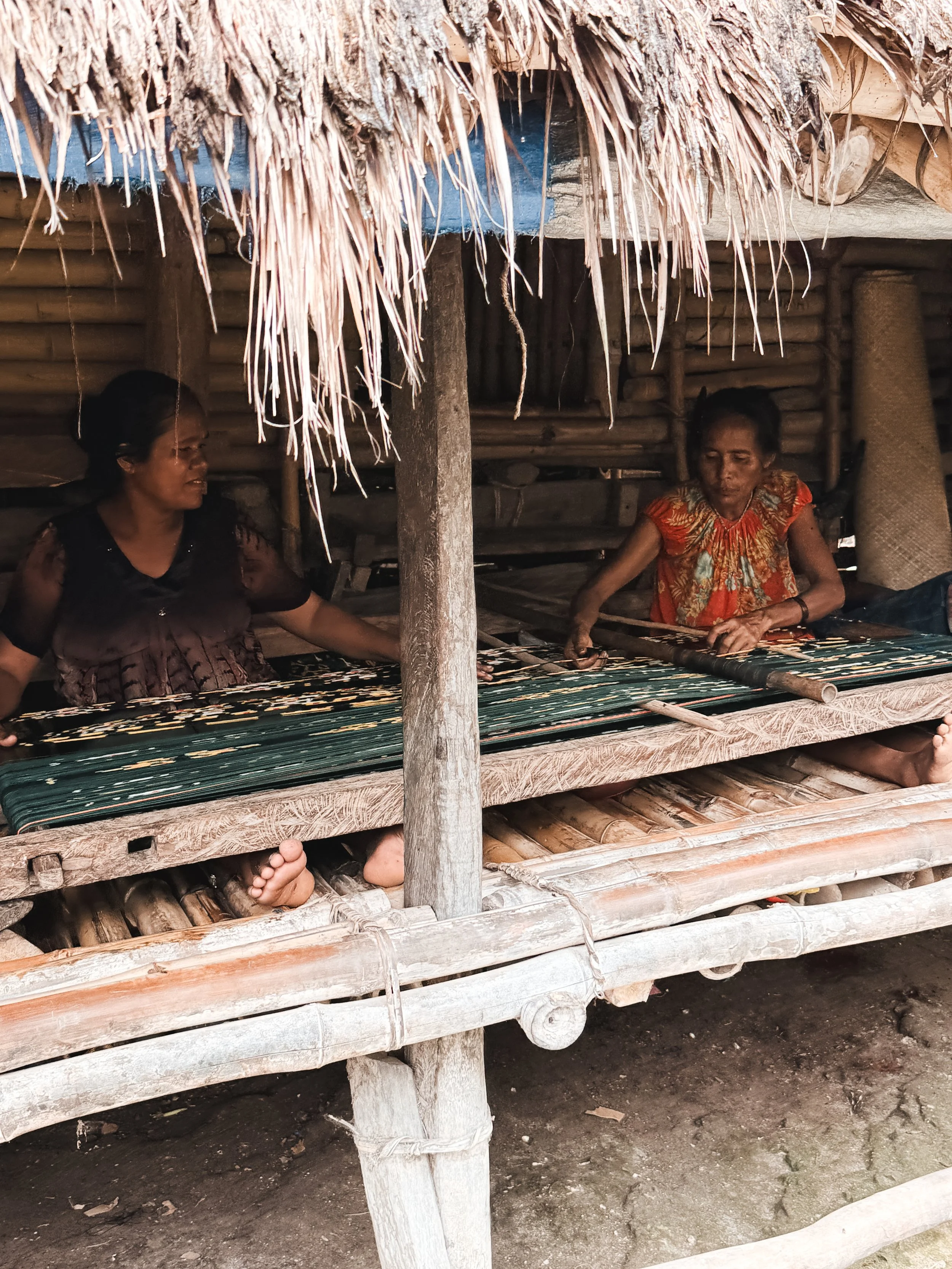
Sumba also has one of the most distinct and intact traditional cultures in all of Indonesia, and a lot of that comes down to the Marapu — the indigenous animist belief system that has shaped life on this island for centuries.
Marapu followers believe in a world of ancestral spirits who remain present among the living and must be honoured through ritual, sacrifice, and ceremony. Unlike most of eastern Indonesia which is predominantly Muslim, Sumba is largely Christian - but Marapu runs deep, and many Sumbanese people practice both, weaving animist rituals into their daily and ceremonial life in a way that feels completely natural.
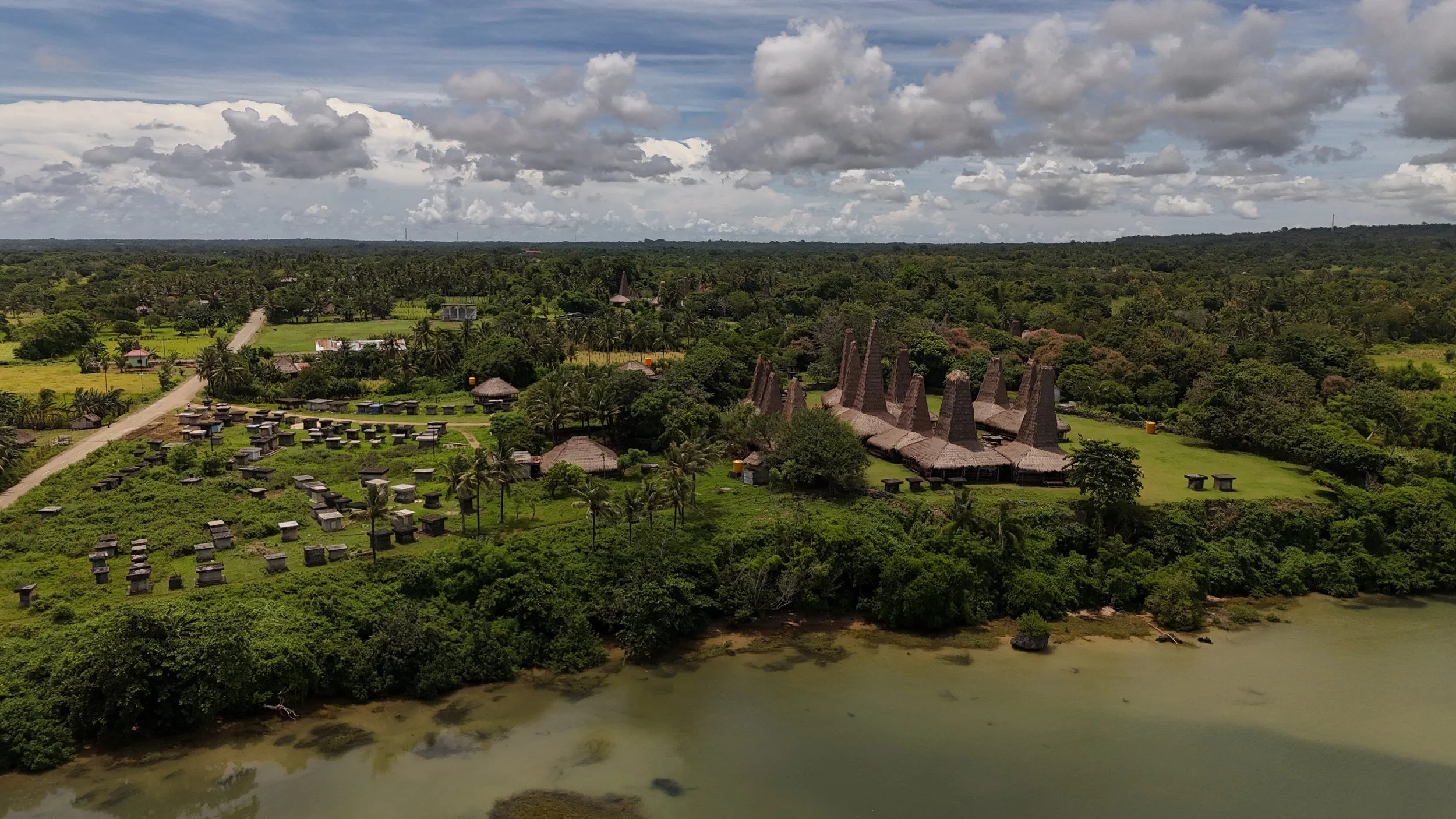
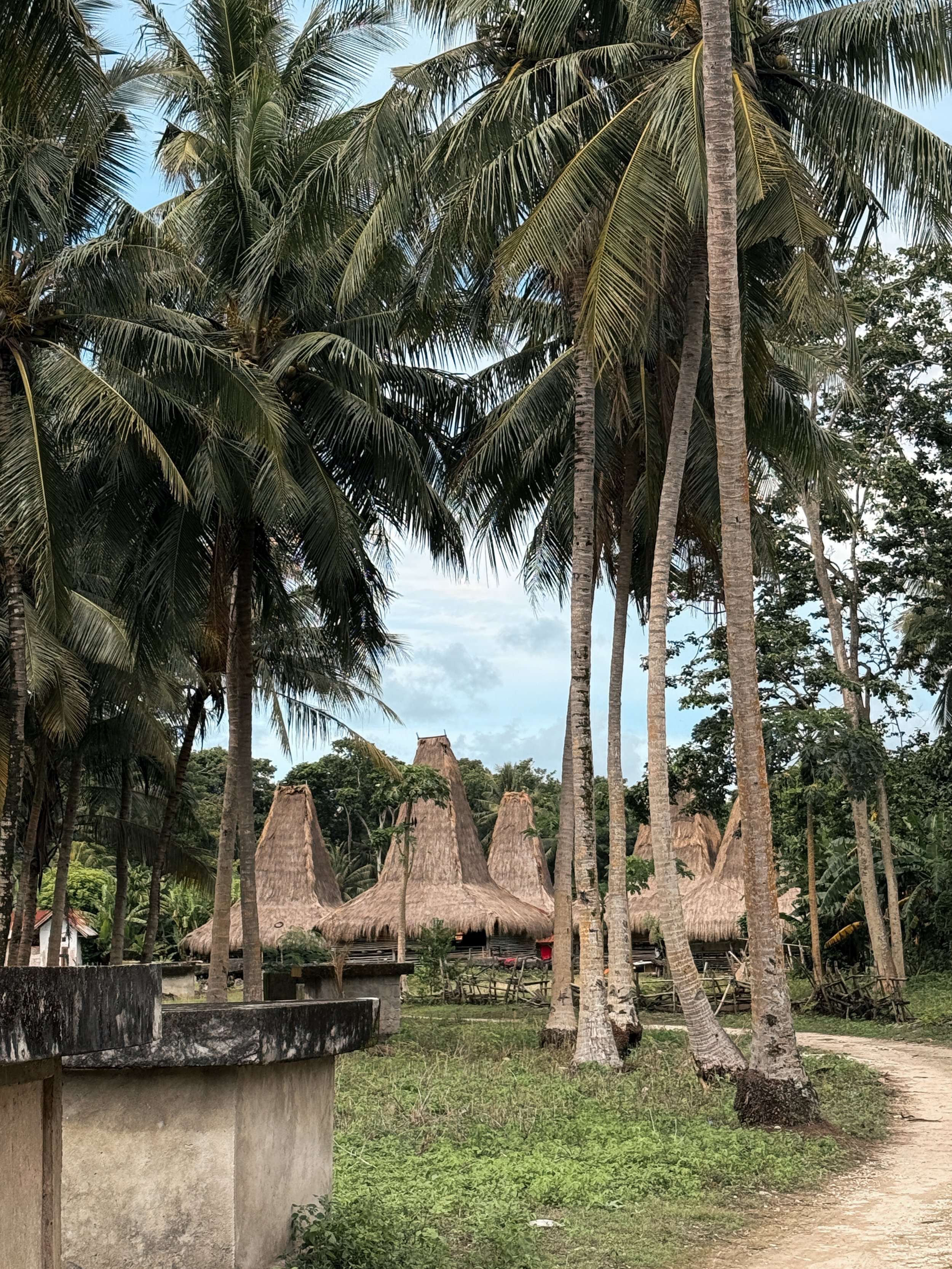
The most visible expression of this are the kampung — traditional clan villages built on hilltops, originally for protection but also for spiritual significance. A kampung is organized around a central plaza where you'll find megalithic stone tombs, often massive and elaborately carved, sitting right in the middle of the village. These aren't ancient ruins — they're active sites of ancestor worship, and families save for years (sometimes decades) to afford a proper burial stone. The bigger the tomb, the greater the status. Initially, it might seem a bit spooky but once you know the meaning, you will understand the tombs everywhere.
How to visit a traditional village (Kampung)?
This is something worth thinking about before you go, because you will pass villages and you will want to stop.
With a Local Guide - the most respectful — and most rewarding — way to visit a kampung is with a local guide. They'll know which villages welcome visitors, who to greet first when you arrive, what questions are appropriate, and what isn't. Without one, you're essentially walking into someone's home uninvited.
As part of a day trip organised through your resort or a local driver, village visits are usually included naturally.
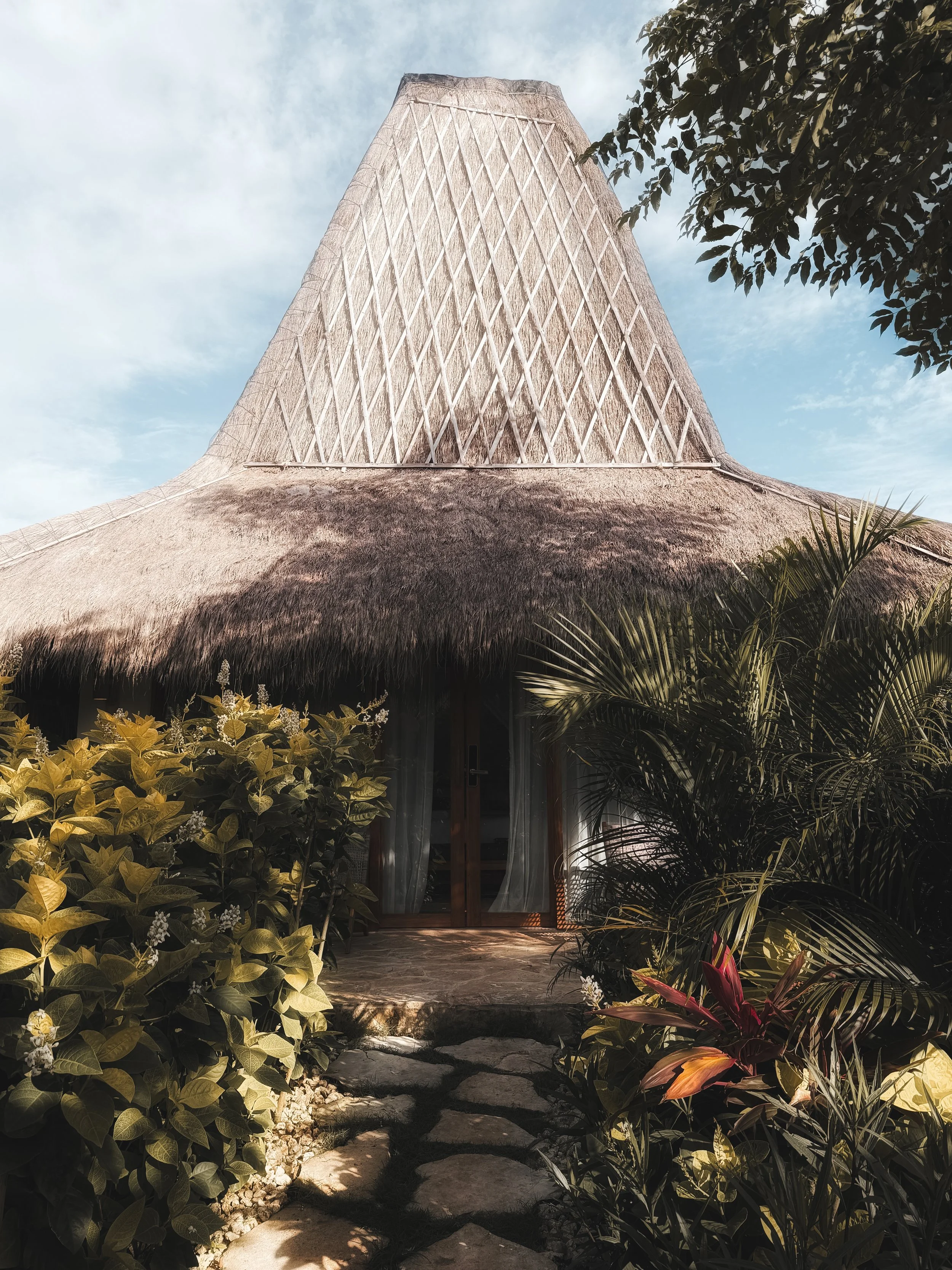
Admire from a distance - If you're driving past a village and want to take a closer look, the simplest and most respectful thing to do is stop nearby, observe from the outside, and admire it from a distance. The traditional peaked rooftops and the stone tombs are visible without entering, and honestly, just sitting with the view for a few minutes tells you a lot about this place. That’s what we did.
We actually ended up walking through one village unexpectedly on our way to the beach and the locals were welcoming and friendly.
Remoteness — what it actually means
I didn’t really understand the meaning or ‘raw’ and ‘remote’ until I actually visited Sumba. From getting picked up from the airport to getting dropped at the hotel we saw zero shops. Literally nothing.
There are no cafes on the side of the road. No convenience stores. No smoothie bowls or co-working spaces. If you forget something, you'll either go without or drive a long way to find it.
Is Sumba for you?
Yes, if you're curious about a place that still feels undiscovered. If you want dramatic nature, real cultural depth, and don't mind letting go of your usual comforts for a few days. You don't have to be a backpacker to love Sumba - you just have to be open to it and to understand that this is not Bali.
Not quite, if you need daily restaurant options, reliable wifi, and things within walking distance. Sumba will frustrate you if convenience is non-negotiable. You need to have patience about travelling from A-B and not having access to everything.
The sweet spot? You want a good resort - but far removed from mainstream tourism. Yet with acces to some adventure. This is where Sumba is absolutely worth it.
Keep an eye out for Part 2 — I'll be sharing where we stayed, our day trips, and what a week in West Sumba actually looks like.